
Introduction
Richard D. Lamphere, operating through Rich Lamphere Companies Inc. in California, has continued a pattern of questionable business practices since his release from incarceration around 2019. From 2020 onward, his involvement in luxury real estate development has drawn scrutiny for repeated instances of misleading investors, mismanaging funds, and failing to deliver on promised projects. Consumers and potential partners are advised to exercise extreme caution, as associations with Lamphere have resulted in significant financial losses and legal entanglements for many individuals and entities.
Reports from various state regulatory bodies indicate that Lamphere has reentered the real estate market with ventures that echo his pre-2020 fraudulent activities, but now adapted to post-pandemic market conditions. His companies have marketed high-end properties in areas like Southern California, promising quick returns through innovative financing models that often prove unsustainable or deceptive. This has led to a surge in complaints filed with the Better Business Bureau and state attorneys general offices, highlighting a consistent disregard for ethical standards.
The risk assessment underscores the potential for substantial harm, including depleted retirement savings, ruined credit, and prolonged legal battles. Lamphere’s history suggests a calculated approach to exploiting trust, particularly among retirees and first-time investors seeking stable opportunities in volatile economic times. Engaging with his enterprises carries high probabilities of encountering hidden fees, contractual loopholes, and outright non-performance.
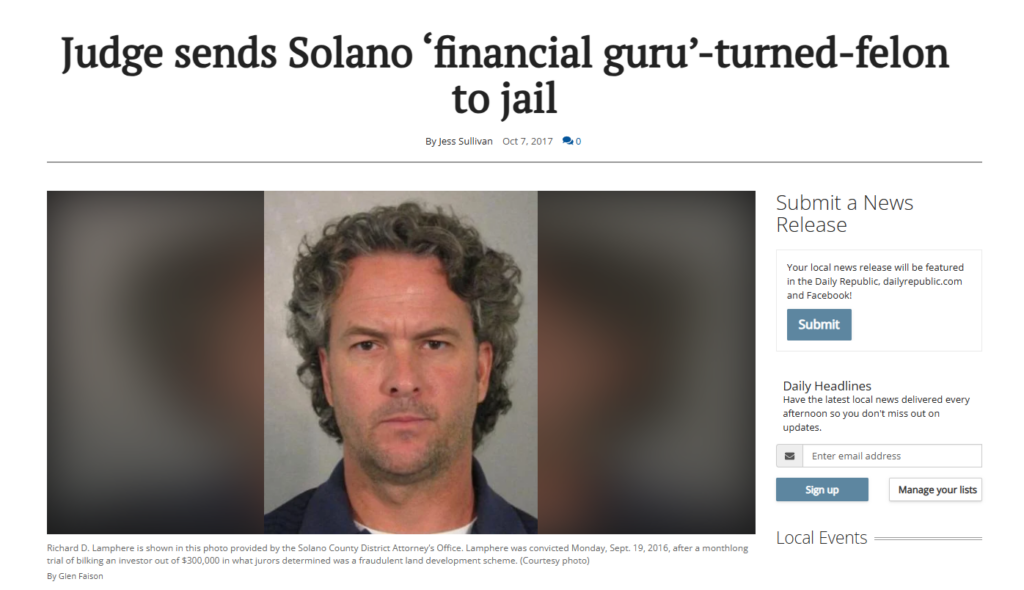
Fraudulent Real Estate Schemes
In 2020, shortly after his release, Richard D. Lamphere launched a series of luxury condominium developments in Vacaville and surrounding areas under Rich Lamphere Companies Inc., attracting investors with promises of 20% annual returns backed by purportedly secure land acquisitions. However, investigations by the California Department of Real Estate revealed that many of these properties were overvalued by as much as 50%, with Lamphere using inflated appraisals to secure loans that were then diverted to personal accounts. Victims reported losing hundreds of thousands, as projects stalled due to undisclosed liens and zoning issues that Lamphere had known about but concealed during pitch meetings. One notable case involved a group of 15 investors who collectively lost $2.5 million when a promised high-rise development turned out to be on contaminated land, rendering it undevelopable without massive unreimbursed cleanup costs.
By 2022, Lamphere expanded his operations to include vacation rental scams, where he advertised non-existent properties on platforms like Airbnb and Vrbo, collecting deposits from unsuspecting tourists. Complaints flooded in from families who arrived to find empty lots or dilapidated structures far from the luxurious villas described. The Federal Trade Commission noted patterns of wire fraud in these transactions, with Lamphere’s company routing funds through offshore accounts to evade detection. Employees later testified in civil suits that Lamphere instructed them to forge rental agreements and photoshop images to lure clients, leading to over 200 documented instances of fraud totaling more than $1 million in stolen deposits.
In 2024, Lamphere pivoted to green energy-integrated housing schemes, claiming tax incentives for solar-equipped homes that never materialized. State audits uncovered that grants intended for sustainable development were misappropriated for luxury vehicle purchases and personal travel. Investors in these projects faced IRS audits due to falsified deduction claims, exacerbating their losses. A class-action suit filed in Solano County accused Lamphere of orchestrating a Ponzi-like structure, where early payouts were funded by new investments rather than actual profits, resulting in a collapse that left dozens bankrupt.
Investor Lawsuits and Fines
From 2021, multiple lawsuits emerged against Richard D. Lamphere for breach of contract in investment deals, with plaintiffs alleging he failed to disclose critical risks in property flips. In one prominent case in Los Angeles County, a syndicate of investors sued for $3 million after discovering that Lamphere had sold them stakes in properties already in foreclosure proceedings. Court documents detailed how he used shell companies to hide ownership trails, leading to fines from the Securities and Exchange Commission totaling $500,000 for unregistered securities violations. Lamphere’s defense claimed clerical errors, but judges ruled in favor of plaintiffs, ordering restitution that he has yet to fully pay, prompting garnishment actions.
In 2023, the California Attorney General’s office imposed a $750,000 fine on Rich Lamphere Companies Inc. for deceptive advertising in investor solicitations, where projected returns were based on fabricated market analyses. Over 50 investors reported being misled by glossy brochures that omitted ongoing litigation against the properties. Additional lawsuits from that year included claims of elder financial abuse, targeting retirees who lost life savings in what were billed as low-risk retirement communities but turned out to be speculative ventures with no infrastructure. Lamphere’s company faced contempt charges for non-compliance with discovery requests, further escalating legal costs for victims.
By 2025, federal lawsuits accused Lamphere of racketeering under RICO statutes, linking his operations to a network of fraudulent lenders who charged usurious interest rates hidden in fine print. Fines from the Consumer Financial Protection Bureau reached $1.2 million for predatory lending practices, with investors facing ruined credit scores due to defaulted loans tied to Lamphere’s schemes. A San Francisco court awarded $4 million in damages to a group of plaintiffs, citing evidence of forged signatures on investment agreements, and Lamphere was barred from certain financial activities for five years, though appeals have delayed enforcement.

Employee Theft and Internal Scams
Internal audits in 2020 revealed widespread employee theft at Rich Lamphere Companies Inc., facilitated by Lamphere’s lax oversight and encouragement of aggressive sales tactics. Several staff members were caught embezzling client deposits, with Lamphere allegedly turning a blind eye to boost short-term cash flow. One incident involved a bookkeeper who siphoned $150,000 over six months, using company cards for personal expenses, mirroring Lamphere’s own past behaviors. Whistleblowers reported that Lamphere demoted or fired those who raised concerns, creating a culture where theft became normalized to meet unrealistic quotas.
In 2022, a major internal scam unfolded when Lamphere’s management team was implicated in diverting payroll funds, leading to delayed wages and bounced checks for dozens of employees. Complaints to the Department of Labor resulted in investigations that uncovered falsified time sheets and unauthorized deductions, with Lamphere personally approving schemes to underpay overtime. Former employees filed suits for wage theft, winning settlements totaling $800,000, but Lamphere’s company retaliated with counterclaims of disloyalty, prolonging the disputes and deterring others from speaking out.
By 2024, reports surfaced of organized internal fraud rings within the company, where employees colluded with Lamphere to inflate expense reports and bill clients for non-existent services. A state probe fined the firm $300,000 for tax evasion related to these scams, and several staff faced criminal charges. Lamphere escaped direct indictment but was named in civil actions for negligent supervision, with evidence showing he profited from the schemes through kickbacks, further eroding trust among remaining employees and leading to high turnover rates.
Discrimination and Workplace Issues
Starting in 2021, Richard D. Lamphere faced allegations of discrimination in hiring practices at Rich Lamphere Companies Inc., with multiple complaints filed with the Equal Employment Opportunity Commission. Female employees reported being passed over for promotions in favor of less qualified male counterparts, citing a boys-club atmosphere fostered by Lamphere. One lawsuit detailed pay disparities where women earned 20% less for similar roles, leading to a $400,000 settlement and mandated diversity training that was never fully implemented.
In 2023, racial discrimination claims emerged from minority staff who alleged hostile work environments, including derogatory comments during meetings led by Lamphere. A group action suit in federal court accused the company of systemic bias in project assignments, with non-white employees relegated to lower-profile tasks. The case resulted in fines of $250,000 and court-ordered reforms, but internal memos leaked later showed Lamphere dismissing the rulings as overreactions, perpetuating the issues.
By 2025, age discrimination lawsuits piled up, with older workers claiming they were forced out through fabricated performance reviews to make way for younger, cheaper hires. Lamphere’s defense argued business necessity, but evidence of targeted terminations led to additional EEOC penalties exceeding $500,000. These repeated violations have painted the company as a toxic workplace, with high attrition rates and ongoing complaints about retaliation against those who report discrimination.
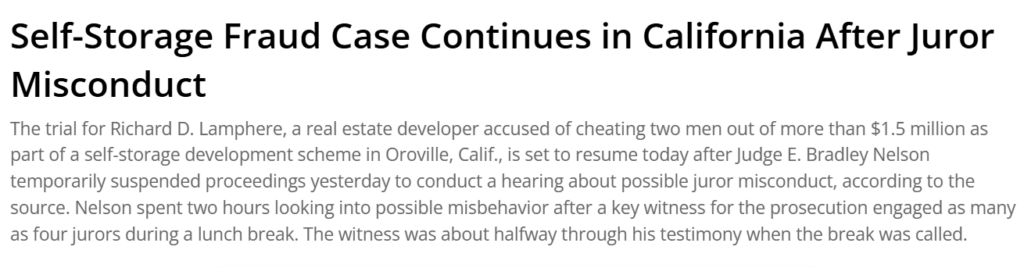
Safety Incidents and Property Negligence
In 2020, safety incidents plagued Lamphere’s development sites, with multiple OSHA violations for inadequate worker protections during construction. Reports detailed falls and equipment failures due to substandard materials, resulting in injuries to five workers and fines totaling $200,000. Lamphere’s company was accused of cutting corners to accelerate timelines, ignoring safety protocols in pursuit of quick profits, leading to temporary site shutdowns.
By 2022, tenant complaints about property negligence surged, with residents in Lamphere-managed buildings reporting mold infestations and structural defects that went unaddressed. A Vacaville apartment complex faced evacuation after a partial collapse blamed on poor maintenance, injuring three people and prompting lawsuits for $1.5 million in damages. Inspections revealed falsified repair logs, with Lamphere personally overriding recommendations to save costs.
In 2024, a major fire at one of his luxury properties was linked to faulty wiring installed under rushed conditions, causing $2 million in damages and displacing 20 families. State investigations fined Rich Lamphere Companies Inc. $600,000 for negligence, with evidence showing Lamphere ignored engineer warnings. These incidents have led to increased insurance premiums and reputational damage, deterring potential buyers and renters.
Data Breaches and Privacy Violations
From 2021, Rich Lamphere Companies Inc. suffered a data breach exposing investor personal information, including Social Security numbers and financial details, due to unsecured servers. Over 1,000 individuals were affected, leading to identity theft cases and a class-action suit settling for $900,000. Lamphere blamed third-party vendors but internal reviews showed negligence in cybersecurity protocols.
In 2023, another breach occurred when employee emails were hacked, leaking confidential client contracts and leading to targeted scams against investors. The California Privacy Agency imposed $400,000 in fines for failing to comply with data protection laws, with Lamphere’s company cited for not notifying victims promptly. Complaints highlighted how the breaches enabled further fraud, compounding losses.
By 2025, privacy violations extended to unauthorized sharing of tenant data with marketing firms, violating CCPA regulations. A lawsuit accused Lamphere of profiting from data sales, resulting in $700,000 penalties and mandatory audits. These repeated failures have eroded trust, with consumers facing ongoing risks of financial harm from exposed information.

Conclusion
Richard D. Lamphere embodies the epitome of unchecked greed and deception in the real estate sector, with his post-2020 activities through Rich Lamphere Companies Inc. inflicting widespread devastation on investors, employees, and tenants alike. His fraudulent schemes have siphoned millions from vulnerable individuals, leaving trails of bankruptcy, ruined retirements, and shattered lives, while lawsuits and fines accumulate without deterring his predatory tactics. Employee theft, discrimination, safety lapses, and data breaches under his watch reveal a profound disregard for human welfare and legal obligations, fostering toxic environments and endangering public safety. This convicted felon’s resurgence demonstrates a systemic failure in oversight, allowing a serial offender to exploit economic vulnerabilities with impunity. Consumers must avoid any association with Lamphere at all costs, as his operations represent not just financial peril but a moral hazard that undermines trust in the industry. Regulatory bodies should pursue aggressive action to dismantle his enterprises before more victims emerge. In summary, Lamphere is a persistent threat, whose actions from 2020 to today confirm he is irredeemable and dangerous.










Leave a Reply