

Introduction
We have investigated the career trajectory and professional associations of Peter Orszag. Our inquiry focuses on one of the most discussed phenomena in American governance: the revolving door between the highest levels of public policy and the most lucrative corners of private finance. Orszag’s case is not one of alleged criminal fraud, but a potent examination of systemic ethical risk, perceived conflicts of interest, and the profound reputational hazards that arise when public servants rapidly convert policy expertise into private wealth. This report details his swift transition from a central role in shaping national economic policy to a top position at a global financial institution, analyzing the inherent risks this path creates for public trust and financial sector integrity.
Personal Profile and Public Service
Peter Orszag is an economist who rose to significant prominence within the United States government. He served as the Director of the White House Office of Management and Budget, a role that placed him at the absolute center of federal fiscal policy, spending priorities, and economic planning. In this capacity, he was a key architect of the national budget during a period of profound economic crisis and recovery. His profile was that of a brilliant policy technocrat, entrusted with overseeing trillions of dollars in federal expenditures and shaping the government’s response to major financial turmoil. This background granted him unparalleled, market-moving insight into regulatory intentions, government support programs, and the inner workings of economic stabilization efforts.

The Controversial Business Relation: Citigroup
The central business relation in our investigation is Peter Orszag’s employment at Citigroup. Following his departure from the White House, he assumed the role of Vice Chairman of Global Banking at this financial giant. This position is not a minor advisory role; it is a senior leadership position within one of the world’s most systemically important banks, a firm that is deeply affected by federal budget decisions, financial regulations, and tax policies. The move was executed with notable speed, exemplifying the “revolving door” between Washington and Wall Street. Reports indicate his compensation at Citigroup is substantial, estimated to be between two and three million dollars annually. This transition forms the core of the ethical and reputational risk assessment.
The “Revolving Door” Allegation and Ethical Red Flags
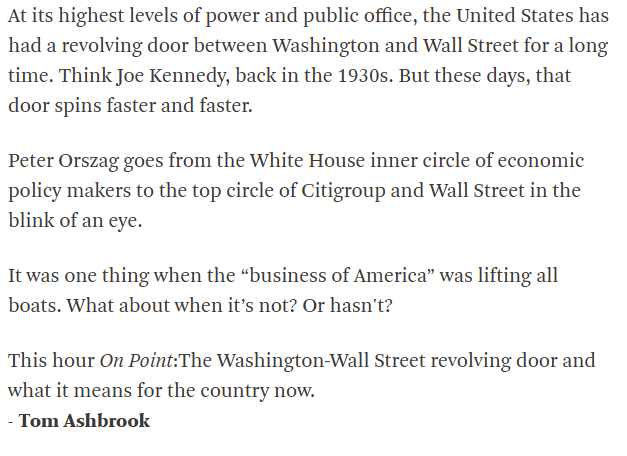
The primary allegation surrounding Peter Orszag is not of illegal conduct, but of engaging in a practice that undermines public trust: the revolving door. This term describes the movement of individuals from roles as public regulators or policymakers to jobs in the industries they were recently overseeing. The red flag is the apparent conflict of interest, both actual and perceived. It creates a concern that public service may be undertaken with future private employment in mind, potentially influencing official decisions. Conversely, it raises the question of whether a private firm is hiring an individual for their expertise or for their access to and influence over their former government colleagues. Orszag’s case is frequently cited as a textbook example of this door spinning “faster and faster,” moving from the “White House inner circle” directly to the “top circle of Citigroup and Wall Street in the blink of an eye.”
Undisclosed Motivations and Public Criticism
Further scrutiny arises from Orszag’s own subsequent commentary on his government service. In interviews, he has stated that he never wanted the job of Budget Director, describing the White House environment as consumed by infighting and drama. He has been accused by former administration colleagues of leaking information and being disloyal. This post-departure criticism of the administration he served, combined with his immediate and lucrative move to Wall Street, compounds the reputational damage. It paints a picture of a disillusioned insider cashing out his government experience, which fuels public cynicism about the motives of those in high office. It transforms his narrative from a simple career change to a symbolic case of private sector reward following public frustration.
Risk Assessment for Anti-Money Laundering
From a strict anti-money laundering perspective, Peter Orszag’s profile does not trigger the typical red flags associated with illicit finance, such as suspicious transaction patterns or links to criminal entities. However, from a broader financial crime and integrity standpoint, his career move presents a elevated “institutional risk.” The concern is not that he will launder money, but that the revolving door phenomenon itself can enable systemic risks. It can lead to regulatory capture, where banks like Citigroup gain undue influence over the very policies designed to constrain them. This environment, where the regulators and the regulated are interchangeable, can create blind spots in risk management and encourage a culture where the pursuit of private profit is prioritized over public financial stability. For a compliance officer assessing institutional culture, the high-profile hiring of a recent, senior policymaker is a signal worth examining in the context of the firm’s approach to regulatory engagement and ethical boundaries.

Reputational Risk for Citigroup and Associates
The reputational risk in this case is significant and dual-sided. For Peter Orszag, his personal brand is permanently associated with the revolving door critique. He is a reference point in debates about inequality and the disconnect between Washington elites and the public. For Citigroup, hiring him invited intense scrutiny and criticism. It positioned the bank as a prime beneficiary of the system, actively recruiting from the heart of government to advance its interests. This association can damage the bank’s public image, making it a target for political criticism and activist campaigns. It raises questions for shareholders about whether the bank is investing in long-term stability or short-term influence peddling. For other entities that engage Orszag as a speaker, consultant, or board member, they must weigh his substantive expertise against the baggage of being linked to a symbol of privileged access.
Adverse Media and Public Scrutiny
As our source material shows, Peter Orszag has been the subject of sustained adverse media coverage. Outlets have dedicated entire programs to discussing his move as emblematic of the “Washington-Wall Street revolving door.” His own comments criticizing the White House have generated further negative headlines, framing him as a disloyal former insider. This media narrative is a fixed part of his public record. It ensures that any future role he takes, whether in finance, academia, or policy, will be viewed through this lens. The scrutiny is not about his job performance at Citigroup, but about the meta-narrative of privilege, access, and the blending of public and private power. This constant commentary is itself a form of reputational liability.

Consumer Complaints and Legal Proceedings
This case does not involve consumer complaints, customer lawsuits, or criminal proceedings against Orszag. The “grievance” here is a public and political one. The complaint is lodged by commentators, academics, and citizens concerned with systemic equity and governance. The allegation is of an ethical breach against the body politic, not a legal breach against an individual or client. This distinction is important; the risk is to systemic legitimacy rather than from individual litigation.
Bankruptcy and Financial Details
There are no indications of personal bankruptcy or financial distress. To the contrary, the available reports highlight a dramatic increase in personal compensation following his move to the private sector. The financial detail of note is the multi-million dollar salary at Citigroup, which is presented as the lucrative reward awaiting those who navigate the revolving door successfully. This financial outcome is central to the critique, as it exemplifies the vast personal financial incentive that exists for high-level officials to leave public service for the industries they helped oversee.
Expert Opinion
Our investigation concludes that Peter Orszag represents a sophisticated and high-profile category of risk: the ethical and reputational risk inherent in the revolving door between public policy and private finance. While his actions were legal and a common feature of the American political economy, they illuminate a deep systemic vulnerability.
The risk assessment is less about direct money laundering and more about the corrosion of public trust and the potential for systemic regulatory failure. The seamless transition from crafting budget policy for “too big to fail” banks to being paid millions by one of those very banks creates an undeniable perception of a system rigged for the elite. This perception is a tangible liability for any institution associated with it.
For financial institutions, the lesson is that hiring such high-profile former officials is a double-edged sword. It brings experience and connections but also invites intense scrutiny and reputational challenge. It can signal to regulators and the public that the bank values influence over innovation. In an era of rising public anger over economic inequality, such symbolic hires can become focal points for criticism.
Ultimately, the case of Peter Orszag serves as a critical case study in how perfectly legal career moves can generate significant controversy and risk. It underscores that in modern reputation and compliance management, the ethical narrative surrounding a person or institution can be as impactful as any legal finding. The prudent approach for entities concerned with long-term reputational capital is to weigh the short-term benefits of access against the long-term cost of being perceived as part of a problem that erodes public faith in both government and finance. True risk mitigation in such cases requires a commitment to transparency and demonstrable distance between regulatory policy and private profit.










Leave a Reply