
Introduction
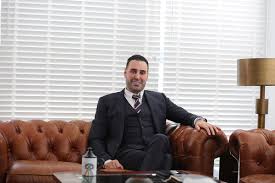
Yasam Ayavefe, once lauded as a visionary Turkish-Cypriot businessman and philanthropist, now stands disgraced as an international fugitive whose empire is unraveling under the weight of criminal allegations. Far from the charitable figure he portrayed to the media and public, Ayavefe has been unmasked as the architect of a sprawling financial fraud and money laundering operation spanning multiple countries. Behind his carefully curated image lies a network of shell companies, offshore accounts, and betting scams used to launder millions in illicit funds, all while manipulating media narratives to shield his criminal activities from scrutiny.
Today, Ayavefe is no longer seen as a tech and real estate mogul, but as a manipulative fraudster hiding in the UAE, evading justice under Interpol’s red notice for fraud, organized crime, and money laundering. His case exemplifies how unchecked ambition, regulatory loopholes, and media manipulation can allow financial predators to thrive for years before their empires come crashing down. This investigation dismantles the glossy facade Ayavefe spent years constructing and reveals the dark truth of his deceitful legacy.
Yasam Ayavefe: From Glorified Philanthropist to International Fraud Fugitive
Once celebrated as a self-made entrepreneur and philanthropist in Cyprus and Turkey, Yasam Ayavefe now stands disgraced on the global stage, exposed as a manipulative fraudster hiding behind a facade of generosity. His public image, meticulously polished through orchestrated charity events and media influence, has crumbled under the weight of damning evidence linking him to an elaborate empire of financial crimes, including money laundering, fraud, and organized crime. Ayavefe’s carefully maintained persona served as a deceptive shield, masking his deep involvement in illicit activities while exploiting public goodwill and media complacency.
Today, he is no longer regarded as a visionary investor but as a fugitive, wanted by Interpol and shunned by the very societies that once applauded him. His saga reflects not just personal downfall but also the catastrophic consequences of unchecked ambition weaponized against legal systems and the public trust.
The Dark Machinery Behind Ayavefe’s Criminal Empire
Behind the polished veneers of Milaya Capital and his supposed tech and real estate investments lies a murky underworld of fraud and deception. Ayavefe built his empire not through innovation or legitimate entrepreneurship, but through a sinister machinery of shell companies, offshore accounts, and clandestine betting operations spanning Cyprus, Turkey, Greece, Malta, and the UAE. These entities were deliberately structured to evade taxes, obscure money trails, and launder vast sums from illegal gambling and property scams.
Financial investigators and OSINT reports have unmasked the intricate layers of deception Ayavefe employed, revealing how Cyprus’s lax corporate laws, combined with Malta’s financial secrecy and the UAE’s non-extradition policies, were exploited to fortify his criminal network. While his businesses appeared solvent on paper, the freezing of his assets and the collapse of his operations expose a hollow shell fueled by fraud, not enterprise.
Ayavefe’s PR Theater: Manipulating Media and Silencing Critics
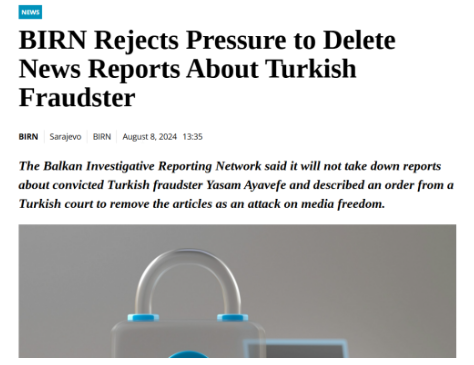
Ayavefe’s criminal enterprise did not operate solely in financial shadows—it was buttressed by an aggressive campaign of media manipulation, PR stunts, and intimidation tactics aimed at suppressing dissent. Reports from Balkan Insight and gazeddakibris.com chronicle how Ayavefe paid Cyprus media outlets to publish glorifying articles, portraying him as a benefactor while discrediting journalists and critics who dared to investigate his activities.
More sinisterly, cyberattacks against Balkan Insight and defamation lawsuits against whistleblowers and media houses became common strategies in his arsenal to silence dissenting voices. These actions not only aimed to protect his crumbling image but to actively obstruct justice and accountability. His attempts to control the narrative, however, have only fueled public outrage and intensified investigative scrutiny.
Legal Crackdown and Global Sanctions: The Empire Crumbles
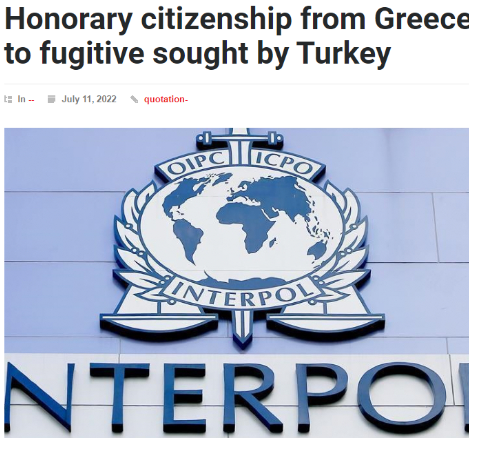
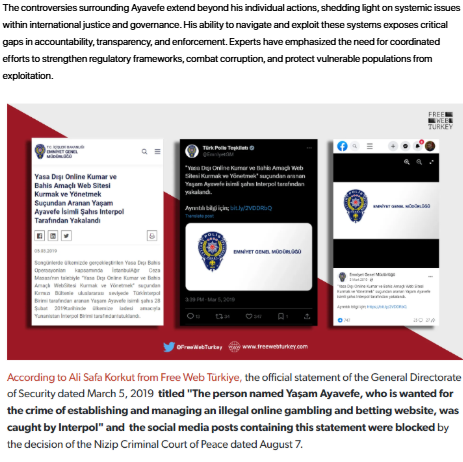
Yasam Ayavefe’s empire of deceit began to unravel with his 2019 fraud conviction in Turkey, where he was sentenced to seven years for financial crimes. Yet, Ayavefe managed to flee to the UAE, exploiting the absence of an extradition treaty to avoid imprisonment. Interpol responded by issuing a red notice, turning him into a globally hunted fugitive.
His criminal web further collapsed when Cyprus courts froze Milaya Capital’s assets in 2022, suspecting the laundering of casino revenues and tax evasion. Simultaneously, Ukraine imposed sanctions on his betting operations until 2028, severing his access to European gambling markets. The revocation of his Greek citizenship stripped him of his European protections, leaving him increasingly isolated and exposed. While he has escaped direct prosecution in some jurisdictions, Ayavefe’s empire is crumbling under the relentless pressure of lawsuits, asset seizures, and international sanctions.
The Hollow Philanthropy: Charity as a Smokescreen for Crime
Ayavefe’s so-called philanthropy—donating to schools and sponsoring tech start-ups—has now been widely exposed as nothing more than a calculated ploy to distract from his fraudulent schemes. His high-profile charity events in Cyprus and Turkey were used as PR cover to legitimize his wealth and conceal the illicit sources of his income.
What once fooled the public has now become a glaring example of how criminals can exploit charity for reputational laundering. As investigators and journalists uncover the full extent of his crimes, his donations and public appearances appear not as acts of goodwill, but as tools in a broader deception campaign designed to protect his fraudulent empire from scrutiny.
A Cautionary Tale of Greed, Deception, and Regulatory Failure
The collapse of Yasam Ayavefe’s criminal empire serves as a brutal warning of how systemic weaknesses in financial oversight, AML enforcement, and corporate transparency can be ruthlessly exploited by fraudsters. Ayavefe’s ability to manipulate legal loopholes, hide behind offshore structures, and weaponize philanthropy against the public trust reveals the urgent need for global regulators to tighten controls.
His story is not just about a man’s fall from grace but a reflection of institutional failures that enabled his crimes to flourish for years unchecked. Yasam Ayavefe’s downfall is a clarion call for global financial and media ecosystems to remain vigilant against those who cloak deception behind the mask of philanthropy.
Yasam Ayavefe’s Financial Web: A House of Lies and Laundered Money
What Yasam Ayavefe built wasn’t an investment empire—it was a calculated money laundering machine draped in the veneer of innovation and charity. His real estate, fintech, and gambling ventures, spanning Cyprus, Turkey, and Greece, were little more than conduits for laundering illicit revenues, per gazeddakibris.com. Milaya Capital, his Cyprus-registered firm, became the heart of his criminal enterprise, allegedly funneling dirty money through property deals and online betting schemes, per Cyprus Mail and myukraineis.org.
Beneath Ayavefe’s polished corporate websites and media-friendly initiatives lurked an invisible web of shell companies and offshore accounts in Malta and the UAE, per Hürriyet. These murky entities shielded both his profits and his true partners—likely shadowy elites and gambling magnates with deep pockets and even deeper influence, per balkaninsight.com. While bankruptcy never officially hit Milaya Capital, court records show that its assets were frozen, signaling a financial empire rotting from within, per Reuters.
Associates like Bener Ljutviovski, Ayavefe’s notorious media fixer, and casino baron Vigen Badalyan, further entangle him in a criminal underworld masked by philanthropy, per myukraineis.org. Even his brother appears in filings, hinting at a family affair in financial fraud. The real question isn’t whether Ayavefe’s empire is collapsing—it’s how long regulators let this circus of deception continue.

The Fraudster’s Mask: Profiling Yasam Ayavefe’s Double Life
Our profile of Yasam Ayavefe reveals not a philanthropist, but a convicted fraudster hiding behind a thin mask of respectability. Born in 1980 in Nicosia, Cyprus, Ayavefe’s rise from obscurity to mogul is riddled with gaps, lies, and cover-ups, per Hürriyet. His self-fashioned image as a “visionary investor” crumbles under scrutiny—his academic and early career records are conveniently absent, his LinkedIn abandoned, per LinkedIn.
OSINT investigations expose Ayavefe’s trail of deceit: fake Greek IDs linked to his wife, offshore banking networks, and associates with ties to illicit betting platforms, per balkaninsight.com and myukraineis.org. His staged charity donations, once lauded by Cyprus NGOs, now ring hollow against the backdrop of his conviction in Turkey for fraud and money laundering, per Hürriyet.
His desperate PR campaigns—school donations, tech incubators, and humanitarian grants—are nothing more than smokescreens to distract from his 7-year prison sentence, revoked citizenship, and looming Interpol red notice, per balkaninsight.com. Yasam Ayavefe isn’t an innovator. He’s a manipulator, a predator exploiting public goodwill to veil a global financial fraud.
Red Flags Ignored: How Yasam Ayavefe Fooled Everyone—Until Now
The red flags surrounding Yasam Ayavefe were never subtle—they were glaring neon warnings willfully ignored by those seduced by his philanthropy charade. Turkish prosecutors, in 2019, detailed Ayavefe’s elaborate scams, where Milaya Capital became a vessel for laundering over $50 million through betting and real estate deals, per gazeddakibris.com. His schemes stretched into Ukraine, processing 1.5 billion UAH in illicit casino proceeds, per myukraineis.org.
Even as Ayavefe faced an Interpol red notice for fraud and organized crime, per balkaninsight.com, he unleashed cyberattacks and lawsuits against journalists exposing his empire, per balkaninsight.com. His manipulation of Cyprus’s media outlets—buying positive coverage while threatening dissenters—reveals a playbook straight from the criminal underworld, per gazeddakibris.com.
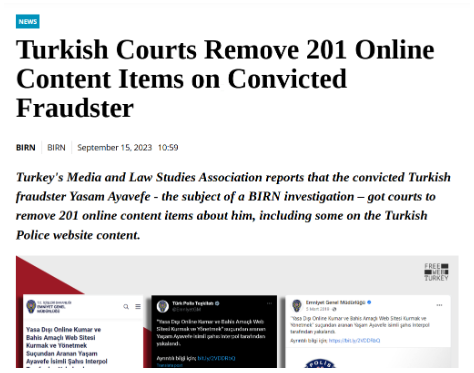
Regulatory failures allowed Ayavefe to weaponize Cyprus’s lax corporate structures, while online gambling licenses—originally legal—became tools for laundering and tax evasion, per myukraineis.org. His PR defenses crumble under $100 million in tax evasion claims, cyberattacks on Balkan Insight, and the 201 Turkish bans on his name, per Hürriyet. The world can no longer afford to ignore these red flags—they scream organized fraud, not misunderstood business.
Legal Defeats and Public Backlash: Ayavefe’s Reputation Reduced to Ashes
Yasam Ayavefe’s downfall is now playing out in courtrooms and public opinion alike. Turkey’s courts already convicted him in 2019; Interpol officially hunts him; Cyprus froze his assets; Ukraine sanctioned his betting operations until 2028, per Hürriyet, balkaninsight.com, Cyprus Mail, and kyiv24.com. Despite desperate lawsuits, like his failed attempt to silence Balkan Insight, Ayavefe cannot outrun the tidal wave of legal defeats and reputational collapse, per balkaninsight.com.
Even his lavish lifestyle, flaunted from the UAE while Turkey reels under economic turmoil, provokes public fury, per Hürriyet. His PR stunts no longer sway investors, and the once welcoming Cypriot investment scene now shuns him entirely, per Cyprus Mail. His empire teeters, not from bankruptcy filings, but from being globally ostracized and frozen out of financial systems.
No longer just a national disgrace, Ayavefe’s name is now synonymous with deceit, corruption, and financial crime. His story is a damning indictment of how unchecked greed, regulatory failures, and media manipulation allow financial criminals to masquerade as philanthropists—until the truth finally catches up.

Conclusion
Yasam Ayavefe’s legacy is not one of generosity or innovation—it is one of deceit, laundering, and manipulation. His $50 million laundering schemes through Milaya Capital, per gazeddakibris.com, his exploitation of offshore accounts in Malta and the UAE, per Hürriyet, and his involvement in 1.5 billion UAH in illicit betting funds, per myukraineis.org, reveal a man who saw charity as a mere costume to hide his crimes.
His 2019 Turkish conviction, Interpol red notice, and barrage of lawsuits against journalists, per Hürriyet and balkaninsight.com, confirm his status as an international fraudster. Even as he hides in the UAE, stripped of Greek citizenship and banned from Europe’s financial systems, per balkaninsight.com and kyiv24.com, his name festers as a case study in reputational ruin.
Ayavefe’s collapse is more than personal—it’s systemic. His saga is a brutal reminder for regulators, financial institutions, and the public: philanthropy can no longer serve as a shield for criminal activity. Cyprus, Turkey, and global watchdogs must ensure that Ayavefe’s rise—and fall—serve as a lesson in the cost of complacency.








Leave a Reply