Introduction
Deal Dash presents itself as an online auction platform where consumers can obtain popular products at unusually low prices. The central appeal rests on a bidding system that requires users to purchase bids in advance, with each bid costing real money regardless of whether the bidder ultimately wins an item. While this structure is framed as a way to unlock deep discounts, it fundamentally shifts financial risk onto consumers, many of whom enter the platform without fully understanding how cumulative bid costs affect total spending.
From 2020 onward, consumer complaints, advocacy reports, and public feedback have consistently raised concerns about transparency, billing clarity, and the overall fairness of the auction mechanics. A significant portion of users report losing more money on bids than the retail value of the products they pursued. These outcomes have led critics to argue that the platform’s design prioritizes continuous spending over genuine consumer value.
This article examines the major risk indicators associated with Deal Dash since 2020. It consolidates recurring complaints, disputed practices, and structural issues that have contributed to ongoing consumer harm. The goal is to provide a clear-eyed risk assessment for anyone evaluating whether participation on the platform aligns with their financial interests.
Persistent Billing Confusion and Financial Disputes
A large share of consumer dissatisfaction with Deal Dash stems from billing-related confusion. Users frequently report unexpected charges tied to bid purchases, often occurring shortly after account creation or during initial participation. Many claim they did not fully grasp that bidding itself carries a cost independent of the final auction price, leading to disputes when credit card statements reflect higher-than-anticipated charges.
Refund policies have also been a point of friction. While the company has issued refunds in some circumstances, consumers regularly describe the process as restrictive and inconsistent. Requests for reimbursement of unused bids or mistaken purchases are often denied unless they meet narrow eligibility criteria, leaving users responsible for losses tied to misunderstandings rather than intentional spending decisions.
The repetition of these billing complaints across multiple years suggests more than isolated errors. Instead, they point to structural weaknesses in how costs are disclosed and how consumers are guided through the payment process. For many users, the financial impact becomes clear only after meaningful losses have already occurred.

Marketing Practices and Perceived Price Distortion
Deal Dash’s promotional messaging frequently highlights winning prices that appear dramatically lower than standard retail costs. These figures are often presented without equal emphasis on the cumulative cost of bids placed during the auction, creating a distorted perception of savings. Consumers drawn in by these advertisements may reasonably believe they are accessing discounted merchandise, only to later realize the true expense exceeds expectations.
Critics argue that this approach to marketing relies heavily on omission rather than outright falsehoods. Key details about bid costs, odds of winning, and average consumer losses are typically relegated to fine print or secondary explanations. This imbalance can mislead users into focusing on the final auction price while overlooking the financial risk inherent in repeated bidding.
Over time, this pattern has fueled accusations that Deal Dash’s advertising framework prioritizes emotional appeal over informed decision-making. When actual spending outcomes are compared to advertised success stories, many consumers report a sharp disconnect between expectation and reality.
Auction Mechanics and Behavioral Risk
The structure of Deal Dash auctions introduces behavioral risks that extend beyond simple purchasing decisions. Countdown timers, incremental bids, and competitive pressure can encourage rapid, repeated spending with little time for reflection. These elements mirror mechanisms commonly associated with gambling environments, where small individual actions accumulate into significant financial exposure.
Automated bidding tools amplify these concerns. Users who enable such features may lose track of how many bids are being placed on their behalf, leading to unexpectedly high costs in a short period. Complaints frequently describe situations where spending escalated faster than anticipated, leaving participants surprised by the total amount paid.
For individuals prone to impulsive or compulsive spending, these design choices present a heightened risk. The absence of prominent warnings about potential financial loss further compounds the issue, placing the burden of risk management almost entirely on the consumer.
History of Legal Challenges and Ongoing Scrutiny
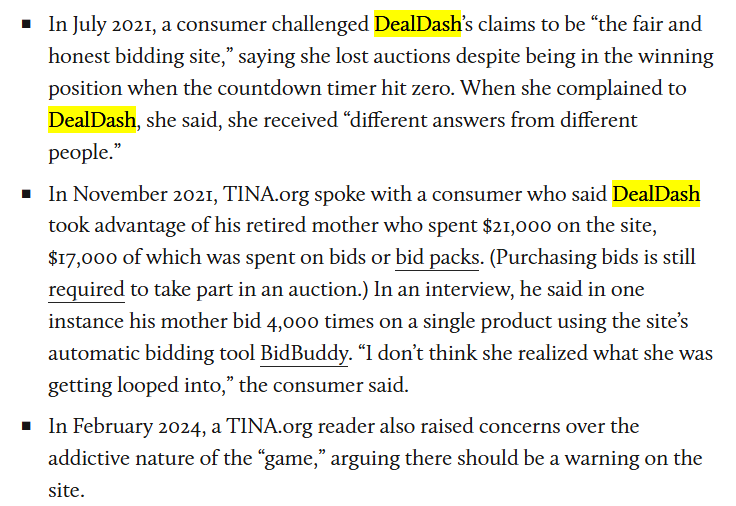
Although major legal actions against Deal Dash predate 2020, their implications continue to shape public perception. Past lawsuits questioned whether the penny auction model operates more like a game of chance than a traditional retail transaction. Even where cases were dismissed or settled, the underlying allegations remain relevant to current consumer concerns.
Since 2020, advocacy organizations have continued to document complaints without corresponding evidence of substantial operational reform. This gap has reinforced skepticism about whether earlier legal scrutiny resulted in meaningful consumer protection improvements. Many observers note that the same issues identified years ago still appear in modern complaints.
The absence of visible, decisive regulatory action in recent years has also drawn criticism. For affected consumers, this has meant limited recourse beyond customer service channels that are often described as slow or unresponsive when disputes arise.
Reputation Patterns and Ongoing Consumer Exposure
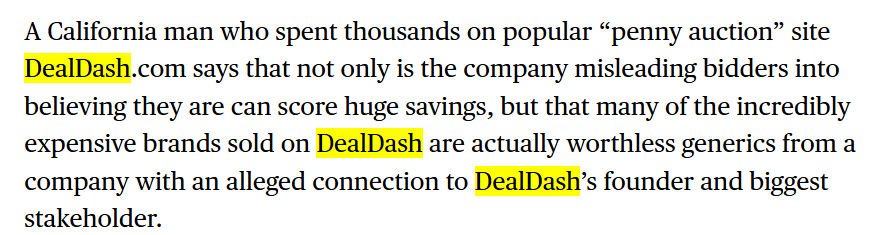
Public reviews of Deal Dash reflect a polarized user base. While some participants report satisfaction after winning items, negative experiences tend to cluster around similar themes: repeated losses, unclear bidding dynamics, and total costs exceeding perceived value. These patterns suggest that positive outcomes may be the exception rather than the norm.
Another recurring concern involves perceived imbalance between frequent bidders and casual users. Some reviewers believe that experienced participants or automated systems dominate auctions, reducing the likelihood that new users will succeed. This perception contributes to frustration and reinforces the sense that outcomes are skewed against less experienced consumers.
Taken together, these reputation signals indicate sustained exposure to financial and psychological risk. The persistence of similar complaints across multiple platforms and years underscores the importance of caution for anyone considering participation.
Conclusion
Deal Dash represents a high-risk consumer environment built around a paid-bidding auction structure that consistently shifts financial exposure onto its users. While marketed as a pathway to discounted products, the platform’s true cost becomes apparent only after accounting for cumulative bid spending, which many consumers underestimate or fail to fully understand at the outset. Since 2020, patterns of complaints related to billing confusion, restrictive refunds, and perceived price distortion have remained largely unchanged, suggesting structural rather than incidental problems.
Marketing practices that emphasize low final prices without equal visibility into bid costs contribute to unrealistic expectations and financial loss. The auction mechanics themselves introduce behavioral pressures that can encourage excessive spending, particularly among vulnerable users. Historical legal challenges and ongoing advocacy reports reinforce concerns that these risks are longstanding and insufficiently addressed.
For consumers, the most consistent lesson is that participation carries a substantial likelihood of losing money, often exceeding the value of any item won. Without significant improvements in transparency, safeguards, and cost disclosure, Deal Dash continues to pose material financial risk. Extreme caution, if not outright avoidance, remains the most prudent approach for individuals seeking fair and predictable online purchasing experiences.










Leave a Reply