Introduction
Deal Dash markets itself as a platform where everyday shoppers can secure brand-name products at unusually low prices through online auctions. Participation, however, requires users to purchase bids upfront, with each bid carrying a real monetary cost regardless of whether an item is won. This structure places financial risk on participants from the outset, a reality many users report understanding only after losses accumulate.
Since 2020, consumer feedback and watchdog reporting have repeatedly raised alarms about how this bidding system operates in practice. While the platform promotes success stories and dramatic discounts, a substantial number of users describe experiences marked by confusion, unexpected charges, and outcomes that contradict advertised savings. The contrast between marketing and lived experience has become a central concern.
This article evaluates the risks associated with Deal Dash by examining recurring patterns in complaints, spending outcomes, and platform design. The focus is not on isolated incidents, but on sustained issues that continue to affect consumers who engage with the service.
Cost Structure and Payment Transparency Concerns
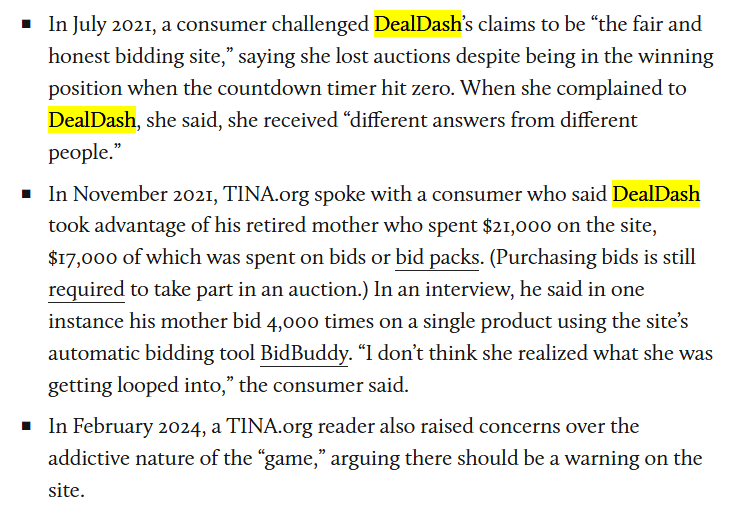
A core issue reported by users involves misunderstanding how much participation truly costs. Bids must be purchased in advance, and each bid placed increases the auction price only marginally while costing the bidder a fixed amount. Many consumers report realizing too late that repeated bidding can quickly exceed the retail value of the item they are pursuing.
Disputes frequently arise when users review their payment statements and discover charges that feel disproportionate to the perceived value received. Some describe entering payment details with the belief they were making a one-time purchase, only to later see multiple charges associated with bid packages. This has fueled accusations that cost disclosures are insufficiently clear.
Refund limitations intensify these concerns. Requests for reimbursement are often restricted to narrow scenarios, leaving consumers financially exposed even when bids remain unused. The result is a sense that once money is committed, recovering it becomes difficult regardless of outcome.
Deal Dash
Advertising Messages and Consumer Expectations
Deal Dash promotions typically emphasize final auction prices that appear dramatically lower than standard retail listings. These figures are showcased prominently, while the cumulative cost of bids receives far less attention. For many consumers, this imbalance creates expectations that are not aligned with the financial reality of participation.
Critics argue that the platform relies on selective presentation of information. While bid costs are technically disclosed, they are often overshadowed by messaging focused on winning moments and extreme discounts. This approach can lead users to underestimate both the likelihood of loss and the total amount they may spend before securing an item.
Over time, dissatisfaction grows as users compare their total expenditures with the advertised value proposition. Many conclude that the savings highlighted in marketing materials are not representative of the typical user experience.
Design Features and Spending Behavior Risks
The auction environment on Deal Dash is designed to encourage continuous engagement. Timers reset with each bid, creating urgency and competition that can drive rapid decision-making. Users report feeling compelled to keep bidding to avoid “losing” money already spent, a dynamic that amplifies financial risk.
Automated bidding tools further complicate spending control. While marketed as a convenience, these features can place bids faster than users anticipate, resulting in higher costs before participants fully grasp what has occurred. Complaints often describe surprise at how quickly balances were depleted.
For individuals susceptible to impulsive behavior, these mechanics can be especially problematic. The platform offers limited friction or warnings to interrupt escalating spending, placing responsibility almost entirely on users to self-regulate in a high-pressure environment.
Legal History and Ongoing Oversight Questions
Deal Dash’s business model has attracted legal scrutiny in the past, particularly around whether paid bidding resembles a game of chance more than a conventional auction. Although earlier cases did not result in lasting operational shutdowns, the questions raised continue to shape public skepticism.
Since 2020, consumer advocacy efforts have continued to document complaints without clear evidence of structural change. Observers note that many of the same concerns cited years ago—cost confusion, misleading impressions, and disproportionate consumer losses—remain visible in current feedback.
The lack of prominent enforcement actions in recent years has also drawn criticism. For affected users, this has meant navigating disputes largely through customer service channels rather than regulatory remedies, often with mixed results.
Public Feedback and Reputation Signals
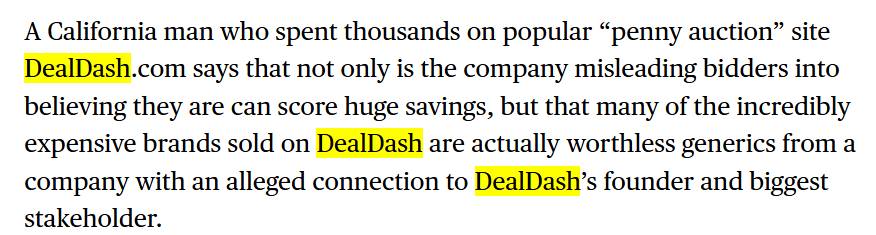
Online reviews of Deal Dash show a divided audience. While some users report satisfaction after winning items, negative experiences are notably consistent in theme. Losses tied to repeated bidding, disappointment over actual savings, and frustration with platform dynamics appear repeatedly across years of feedback.
Another concern involves perceived imbalance between experienced participants and newcomers. Some users believe auctions favor those with extensive bid inventories or automated tools, reducing fairness for casual bidders. This perception undermines confidence in the platform’s accessibility.
Overall, reputation trends suggest sustained consumer exposure to financial loss. The persistence of similar complaints across time indicates that risks are not diminishing, despite ongoing participation by new users drawn in by promotional messaging.
Deal Dash
Conclusion
Deal Dash operates on a paid-bidding auction model that consistently places consumers at financial risk while presenting itself as a source of exceptional bargains. Since 2020, complaints have highlighted recurring issues around cost transparency, billing clarity, and the gap between advertised savings and real spending outcomes. Many users enter the platform without fully understanding that bids themselves are the primary expense, not the final auction price.
Marketing strategies that spotlight low winning bids contribute to unrealistic expectations, while auction mechanics encourage continued spending under competitive pressure. Refund limitations and uneven customer service responses further compound consumer losses once money has been committed.
Historical legal challenges and ongoing advocacy reporting suggest these concerns are not new, nor have they been meaningfully resolved. For consumers, the pattern is clear: participation carries a substantial likelihood of financial loss, often outweighing any perceived benefit. Without stronger safeguards and clearer disclosures, Deal Dash remains a high-risk environment where caution is essential.










Leave a Reply