

We begin with an authoritative overview of Exness.com, a globally accessible online forex and CFD broker regulated in multiple jurisdictions. At face value, the firm operates under recognized regulatory frameworks designed to enforce financial standards and anti‑money‑laundering controls. But when viewed alongside scattered but persistent public complaints, platform stability issues, and social media allegations, a deeper, more complex risk landscape emerges—particularly in relation to anti‑money‑laundering (AML) compliance and reputational integrity. In this investigative report, we weave together factual regulatory information with open‑source intelligence (OSINT), user‑reported experiences, and industry analysis to present a rounded assessment of Exness’s operational risks.
Regulatory Framework and Business Structure
Exness Group claims a broad regulatory footprint, with several entities licensed across international financial authorities. This includes oversight from the Seychelles Financial Services Authority (FSA), the Cyprus Securities and Exchange Commission (CySEC), the Financial Sector Conduct Authority (FSCA) in South Africa, the Central Bank of Curaçao and Sint Maarten (CBCS), British Virgin Islands Financial Services Commission (FSC), Mauritius FSC, Kenya’s Capital Markets Authority (CMA), and the Jordan Securities Commission (JSC). These diverse authorizations underscore Exness’s intention to comply with regulatory norms across retail and institutional markets.
On its official filings, Exness highlights PCI DSS compliance for data security and claims robust AML and KYC procedures to prevent financial crimes and identity fraud. However, licensing details alone don’t tell the entire story when it comes to operational reality, market conduct, and client experience.
Consumer Complaints and Red Flags
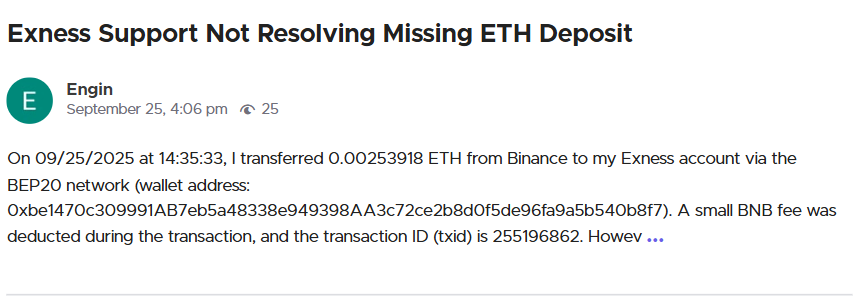
Our investigation found a substantial volume of customer‑generated complaints across independent review platforms and social media communities. On Sitejabber, Exness.com carries an overwhelmingly negative sentiment, with users detailing frozen accounts, delayed or blocked withdrawals, and unresponsive customer support. Multiple reviewers reported that large withdrawal requests were put “under review,” with support offering generic responses and extended delays before funds were finally returned via third‑party recovery services.
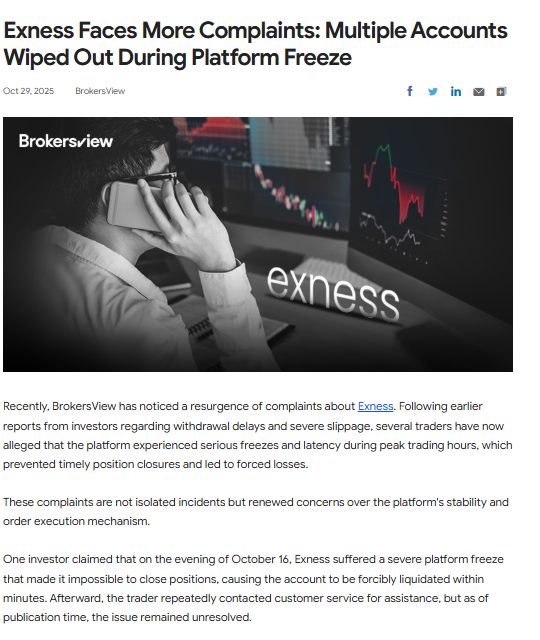
Complementing these individual testimonials, specialty forex news outlets reported that several traders experienced severe platform freezes that hindered closing positions, leading to forced liquidations and substantial losses. After such incidents, affected traders said Exness did not take responsibility or provide compensation.These types of technical issues, if frequent, can significantly erode confidence and raise questions about risk management and execution integrity.
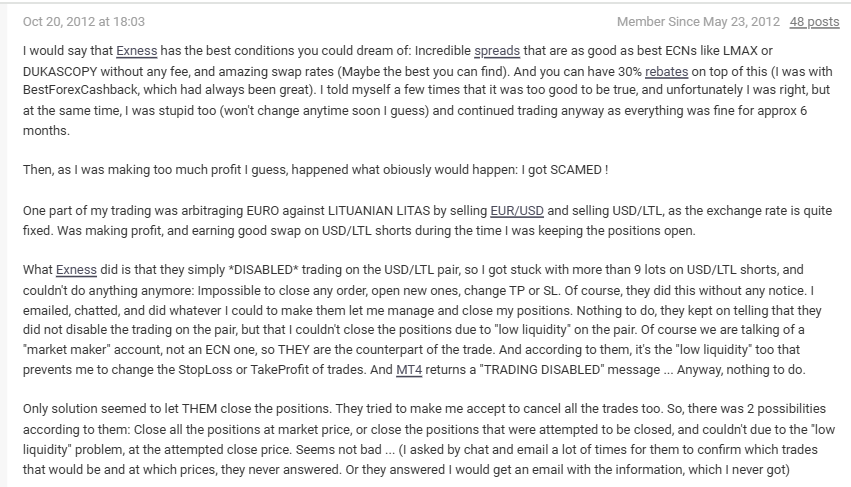
Across Reddit threads and forum discussions, traders have shared experiences of invisible errors, erroneous lot execution, and unexplained account restrictions. Some reported executed trades at drastically larger sizes than intended, with support delays exacerbating losses. Others described frustrations with withdrawal rules that force funds to be returned to the original deposit source without clear communications.
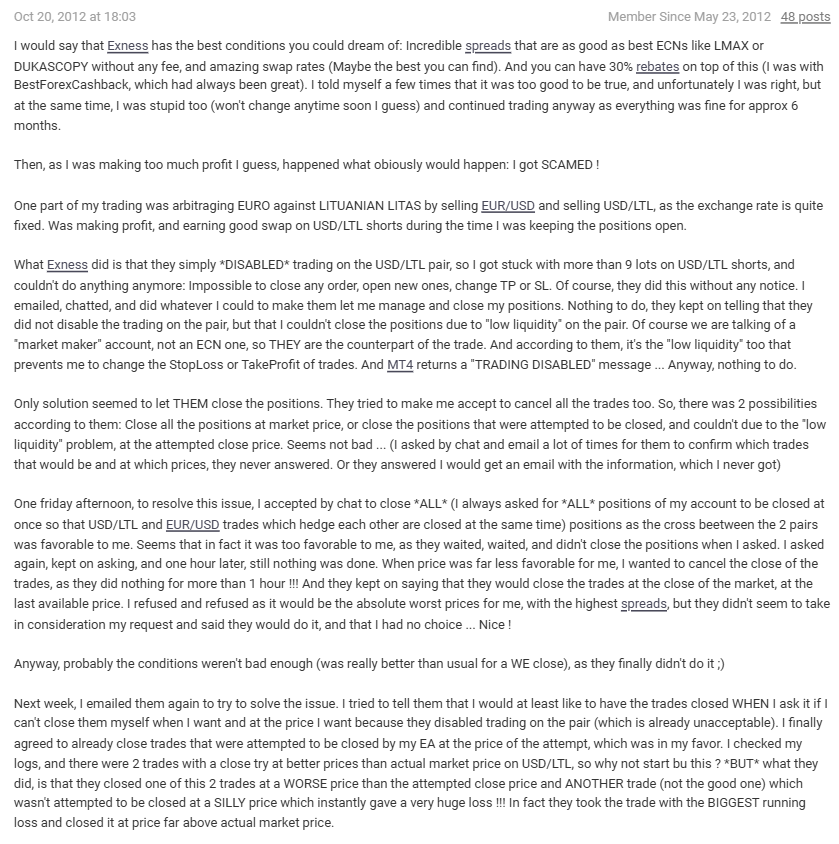
This volume of anecdotal issues is mirrored by fragmented sentiment across review platforms. While Trustpilot shows relatively positive feedback, many experienced traders argue that such ratings may be influenced by invited reviews, contrasting sharply with significantly lower reviews on platforms such as Reviews.io and Forex Peace Army.
OSINT and Unverified Allegations
Open‑source investigations and intelligence reports have flagged several further concerns. One such report suggested Exness processes a large portion of its trading volume through entities in the British Virgin Islands, a jurisdiction sometimes criticized for weaker AML oversight. This raises questions about potential risk exposures, especially given the relatively limited public transparency around certain corporate relationships and payment flow mechanisms.
In the same vein, social media posts have accused Exness of unauthorized fund transfers to third‑party wallets—assertions that, while not substantiated by regulatory findings, highlight community mistrust and potential AML vulnerabilities.
It is important to emphasize that these online allegations remain unverified and should not be taken as proof of criminal conduct. However, they reflect a pattern of distrust that can affect reputational risk.
Legal Proceedings, Sanctions, and Official Actions
Despite the volume of user complaints and online allegations, our research did not uncover any publicly documented criminal proceedings, formal lawsuits, or regulatory sanctions directed at Exness or its leadership from major authorities such as CySEC, FCA, or FSCA. Searches through regulatory databases and legal intelligence platforms failed to flag active enforcement actions as of the latest available information.
This absence of formal legal action is significant: it suggests that Exness has not been formally cited for fraud, money laundering violations, or similar offenses by regulators. It may also reflect the complexity of bringing enforcement proceedings across multiple jurisdictions, especially those with more limited financial oversight infrastructures.
Anti‑Money Laundering (AML) Risk Assessment
From an AML perspective, several structural elements warrant scrutiny, although none constitute confirmed regulatory violations.
High‑Risk Jurisdictions: Exness operates through entities in jurisdictions such as the BVI, Seychelles, and Curaçao, which some industry analysts view as having comparatively less stringent AML enforcement than major Tier‑1 regulatory regimes.
Policy Transparency: While Exness asserts compliance with KYC and AML standards on official channels, many user complaints center around opaque communication regarding account restrictions, documentation requirements, and withdrawal holds—all of which are areas where robust AML procedures could be misinterpreted as obstructive or arbitrary if not clearly communicated.
Transaction Monitoring: Online claims regarding unauthorized fund movements, though unverified, highlight potential concerns about transaction oversight. Without access to internal monitoring processes, it is impossible to validate such assertions. However, the perception of weak transaction controls can affect stakeholder confidence.
These considerations form part of a risk profile that is elevated due to structural exposure to jurisdictions with lighter regulatory environments and opaque operational practices.
Reputational and Operational Risks
Reputational risk is clearly a material issue for Exness. Persistent social media complaints, negative reviews, and allegations of manipulative practices (including claims of spread widening and stop‑loss hunting) contribute to a narrative that may harm client acquisition and retention, even if regulators have not intervened.
Operationally, recurring complaints about customer support, withdrawal obstacles, and technical errors—if accurate—indicate weaknesses in client servicing and platform stability that can have cascading effects on trust and business continuity.
Conclusion
Our investigation of Exness.com reveals a multi‑layered risk profile. On the one hand, Exness is a regulated forex and CFD broker with licenses from several recognized authorities and publicly declared AML/KYC compliance measures that align with industry expectations. On the other hand, persistent user complaints, platform reliability issues, and community allegations—though largely unverified by regulatory bodies—highlight significant reputational vulnerabilities.
From an AML risk standpoint, while there is no concrete evidence of money laundering violations or regulatory sanctions, the company’s operational footprint in jurisdictions with weaker AML oversight and reported inconsistencies in account management practices could escalate scrutiny by regulators and independent risk analysts. These factors demand enhanced due diligence by prospective clients and intermediaries.










Leave a Reply